


Digitize Legal Contracts
Use open source tools from the Accord Project to digitize new or existing legal contracts, connect them to web services and deploy them to the cloud. The projects comprise all of the software necessary to author, edit and execute smart legal contracts in a standardized fashion.
Templates
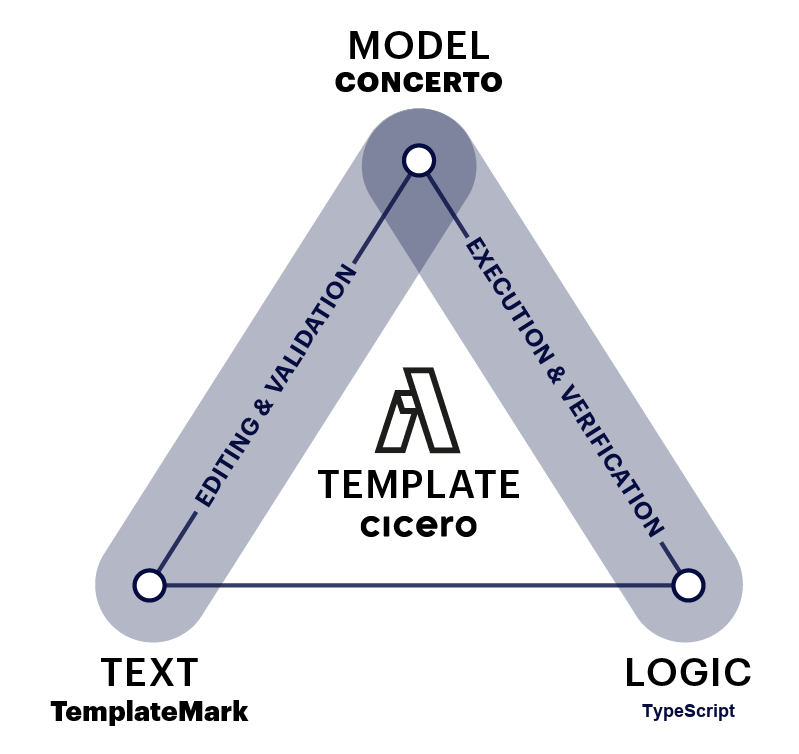
Accord Project Templates are composed of three elements: the Text (the natural language), the Model (the data model), and the Logic (the executable business logic). When combined these three elements allow Accord Project templates to be both human-readable and machine-executable.
Text
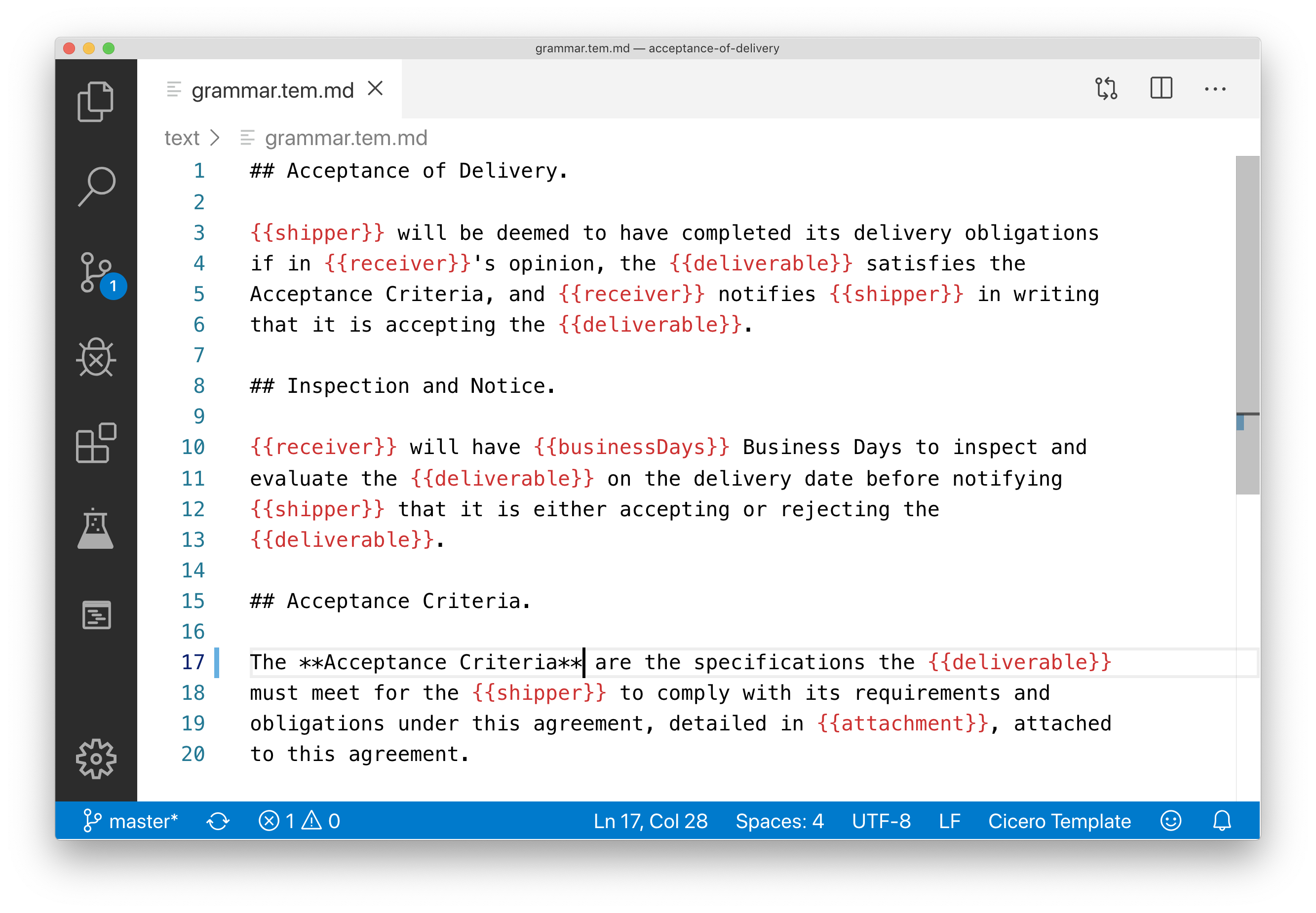
CiceroMark lets you capture the data in a natural language clause or contract text through template variables. And it supports rich text markdown to ensure that your contracts look professional — and are natively legible to large language models.
Model
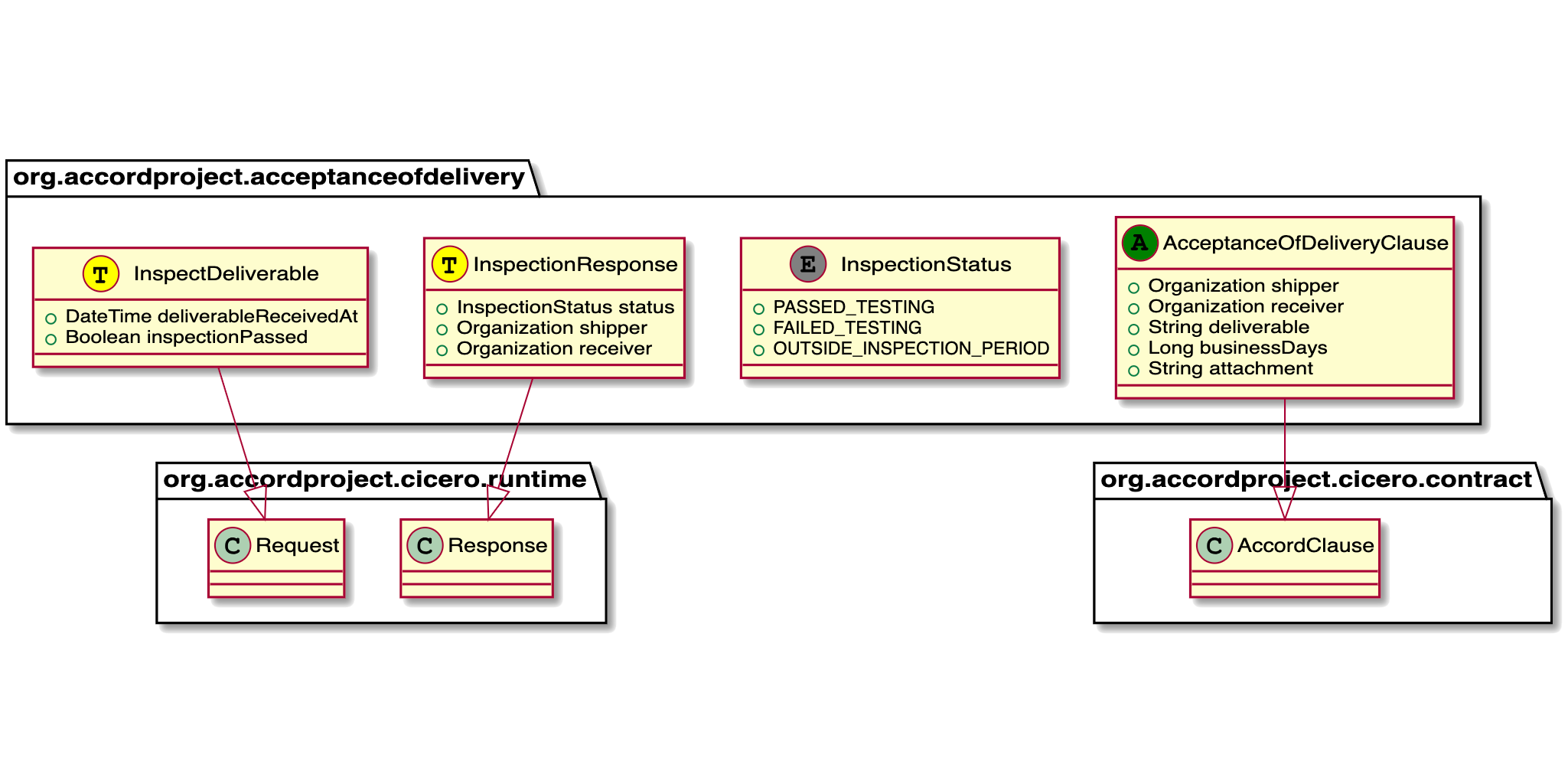
Concerto lets you model the data used in your templates in a flexible and expressive way. Models can be written in a modular and portable way so they can be reused in a variety of contracts. The schema grounds agent-generated output — invalid types fail at validation, not at runtime. Learn more about Concerto.
Logic
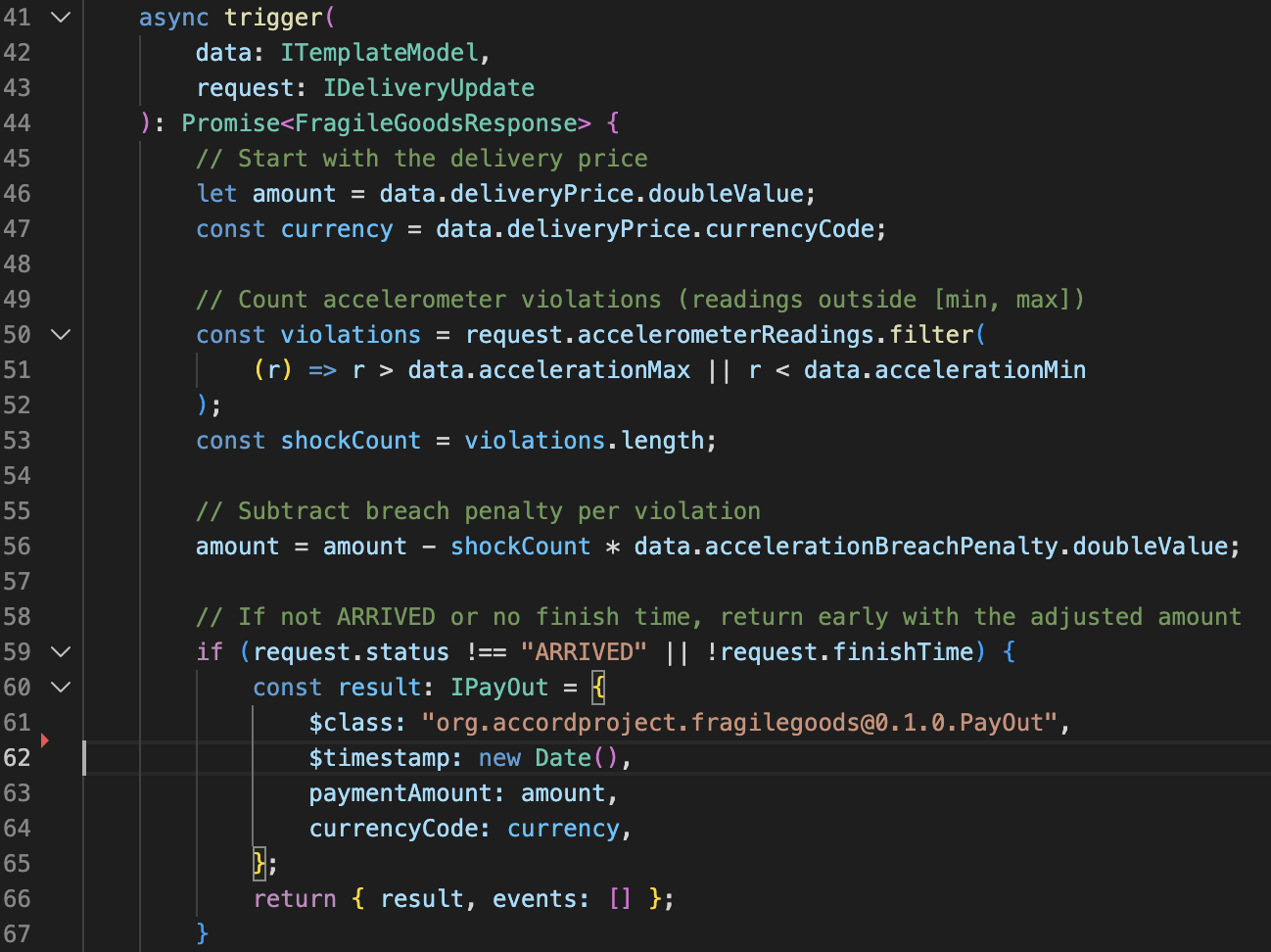
Template logic is written in TypeScript using a class-based pattern that integrates directly with the Concerto data model. Logic can be embedded inline in template text or defined in a separate TypeScript class that extends
TemplateLogic. TypeScript's strong typing means agents can generate and statically verify contract logic before execution.Template Playground
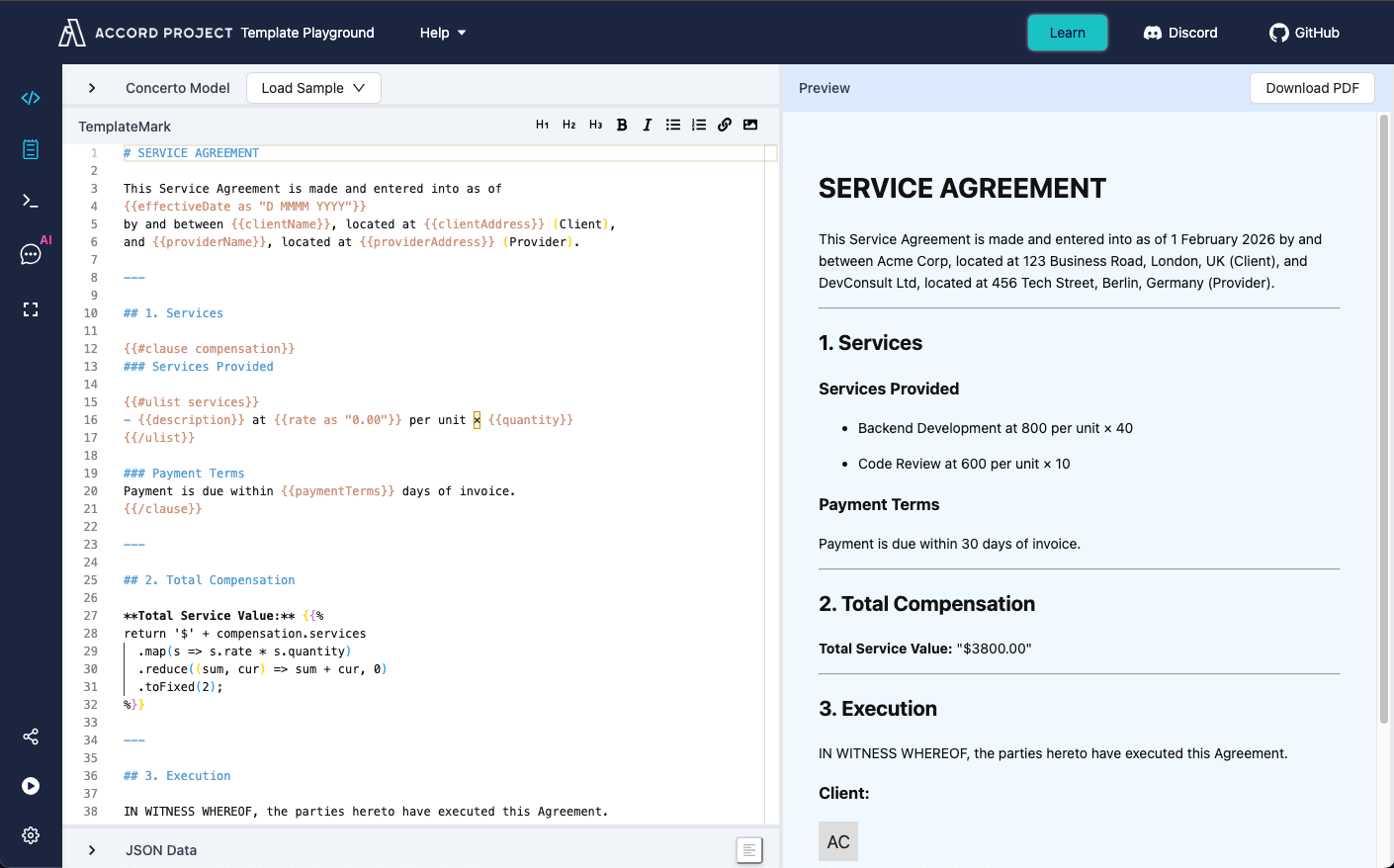
You can author and test templates online in the Accord Project Template Playground. Search for existing templates, edit the contract text and execute the logic.
Built for Agent Workflows
Accord Project's three-component template architecture maps directly onto how modern AI agents operate.
The natural language text (TemplateMark/Markdown) is the format agents read and write fluently. The Concerto schema provides the structured type contract that constrains agent output. The TypeScript logic lets agents generate verifiable, type-safe business rules, with the compiler catching errors before they reach production.
The Agreement Protocol API (APAP) exposes contract templates over a REST interface — including a Model Context Protocol (MCP) endpoint — so any AI assistant or orchestration framework can author, fill, validate, and execute contracts as tool calls.
Learn more about AI & Agent Workflows → · Read the Whitepaper →